
About DynaCITY
DynaCITY responds to the need for more dynamic, inclusive and data-driven urban planning. Many cities still rely on fragmented or static planning methods, while climate risks, demographic change, infrastructure pressures and citizen expectations are becoming more complex. DynaCITY addresses this gap by creating tools that allow cities to simulate, visualise and evaluate possible futures before decisions are implemented.
VISION
A future where cities use trusted digital twins and participatory AI tools to design climate-neutral, resilient and inclusive urban environments together with their communities.
MISSION
To develop, integrate and validate an AI-powered digital twin framework that enables evidence-based planning, accessible citizen engagement and scalable replication across European and international cities.
Objectives
01
Develop a city-scale, AI-enabled digital twin platform for urban planning and management.
02
Embed XModel into urban governance structures and strategic planning processes.
03
Develop XDesign as an intuitive interface for multistakeholder interaction and scenario exploration.
04
Deploy and test AI-driven digital twins with integrated citizen engagement through XEngage.
05
Ensure interoperability, standards alignment and synergies with EU AI and data ecosystems.
06
Create sustainable exploitation, replication and knowledge-sharing pathways for wider adoption.
Terminology
Digital twin
A digital representation of urban systems that can combine data, models and simulations to support planning decisions.
XModel
The DynaCITY simulation engine for analysing urban scenarios through AI, forecasting, backcasting and optimisation.
XDesign
The interactive and XR-ready interface that presents complex outputs in accessible and understandable ways.
XEngage
The participatory layer supporting citizen feedback, co-creation and stakeholder knowledge exchange.
Use case / pilot site
A real urban context where DynaCITY tools are tested, evaluated and adapted to local needs.
Consortium
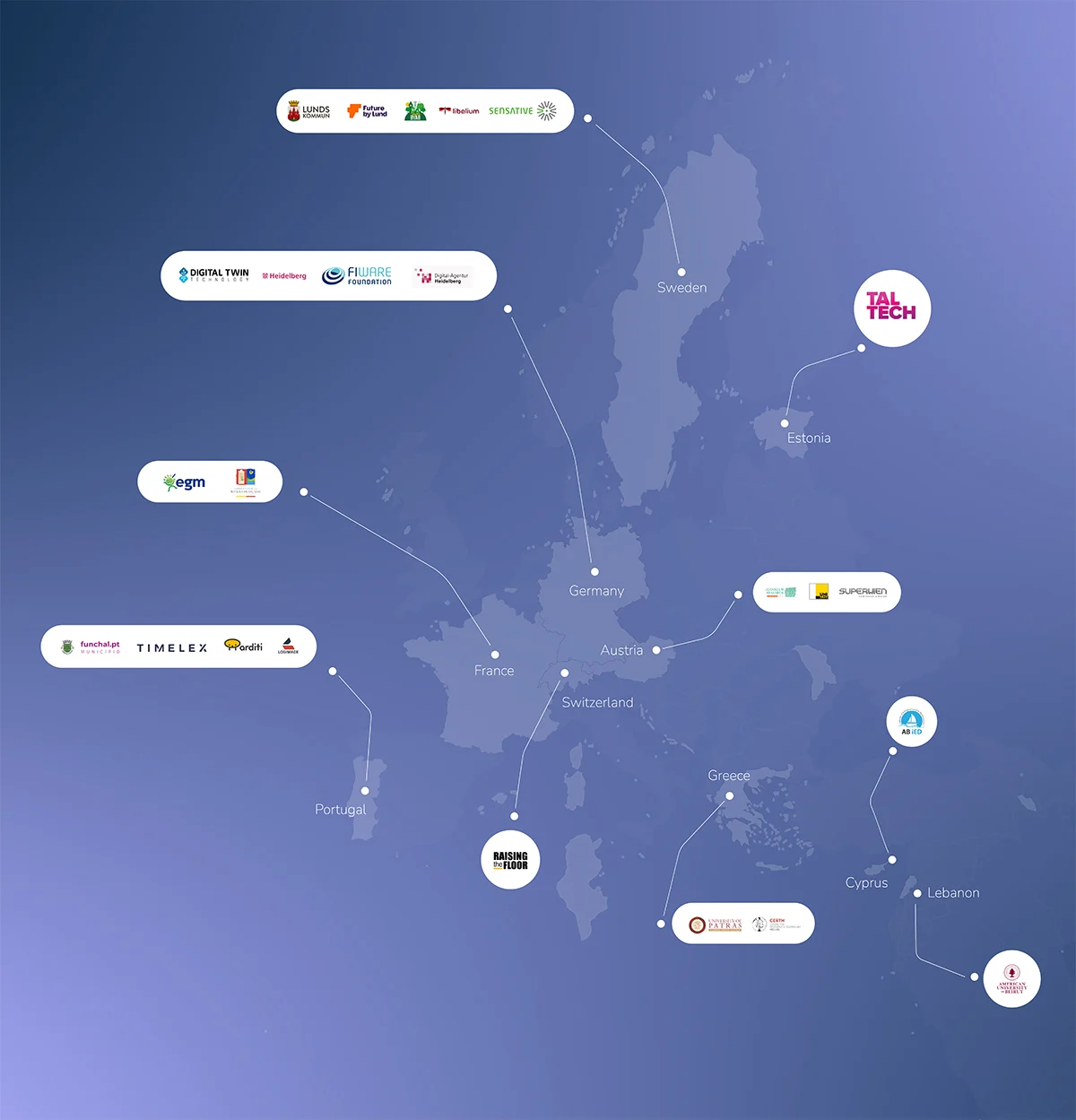
24 partner organisations
across 11 countries,
deliver the DynaCITY project.
Meet the DynaCITY consortium bringing together research, technology, cities, SMEs and inclusion experts across Europe and beyond.
Project Structure & Activities
01 Requirements, UCD Methodology and Architecture Definition
Best practices, user requirements, use cases, ethical considerations, UCD methodology, KPIs and modular architecture.
02 Urban Data Integration and Expert Calibration
XModel data backbone, BIM/GIS, IoT, mobility, energy and environmental streams, expert parameterisation and calibration.
03 Generative AI, Simulations and Urban Scenario Modelling
Generative AI, forecasting, backcasting, simulation engine and multi-objective optimisation across urban domains.
04 Stakeholder Engagement and Interactive Visualisation
XDesign visualisation, XR exploration, SSH-driven co-design and inclusive engagement methods.
05 Participatory and Interactive Tools
Inclusive multimodal interaction tools, voice, gesture, haptics, NLP and XEngage gamified participation.
06 Integration, Harmonisation and Technical Evaluation
System integration, secure data exchange, interoperability with third-party systems and technical validation.
07 Pilot Planning and Small-Scale Testing
Pilot readiness, local needs, stakeholder mapping, small-scale trials and preparation for deployment.
08 Pilot Deployment and User Evaluation
Full deployment in five cities, user onboarding, evaluation, impact assessment and scalability insights.
09 Market and Business Models
Market analysis, business models, scalability strategy, IPR and replication toolkit.
Accessibility & Inclusion
Accessibility is a central feature of DynaCITY. The project is designed to ensure that digital twin tools, XR visualisations and participatory planning processes can be used by diverse communities, including older adults, people with disabilities, socially marginalised communities and users with low digital literacy.
WCAG 2.1 AA & EN 301 549 compliance
XDesign, the project website and all public digital outputs are built and tested against WCAG 2.1 Level AA, as required by EN 301 549 for EU-funded digital services.
Multimodal interaction
Touch, voice, gesture and haptic input options, plus simplified menus, so people with different abilities and preferences can use DynaCITY’s tools.
Multilingual & adaptable content
Multilingual content, text scaling and high-contrast modes ensure the platform works for diverse language and visual needs across all five pilot cities.
Accessible co-design workshops
Workshops and engagement activities are planned with accessibility provisions from the outset, in line with RtF’s (Raising the Floor) inclusion expertise.
Accessible-by-design web content
Web pages, documents and media follow accessible-by-design practice: structured headings, alt text, captions, keyboard operability and visible focus indicators throughout.
Get involved
Read our accessibility commitments and feedback channel, or join the stakeholder community to take part in accessible co-design activities.